On Thursday, October 13, we made a little road trip to Plymouth. As probably everyone in America knows, Plymouth was the site of the colony founded in 1620 by the pilgrims of the Mayflower. Plymouth is where New England was first established. It is the oldest municipality in New England.
After arriving and obtaining a map from the tiny visitor center, we walked to see the Mayflower II, a full-size replica of the original ship. The ship was built in Brixham, England, in 1956, and sailed to Plymouth across the Atlantic Ocean in 1957. It is still seaworthy. It was hard to imagine 102 passengers and about 30 crew members aboard the small 100-foot ship and cramped spaces. The pilgrims endured a lot to get here.
On our way from the Mayflower II to Plymouth Rock, we stopped off and did a tasting of the wines at Plymouth Bay Winery. We bought a few bottles and had them shipped home.
Next up was Plymouth Rock. Traditionally, the rock is said to be the disembarkation site of the Pilgrims, though it can’t be proven. Plymouth Rock became very famous after its identification as the supposed landing site of the Pilgrims, and was subsequently moved to a location in Plymouth Center. During the process, the rock split in two. You can see where it was repaired in my photos. It was later moved to Pilgrim Hall and then to a location under a granite Victorian Canopy, where it was easily accessible and subject to souvenir hunters. The rock was finally moved back to its original location along the town’s waterfront in 1921.


We admired the statue across the road of Massasoit Sachem (c. 1581 – 1661), who was the sachem (leader) of the Wampanoag nation. In March 1621, three months after the founding of Plymouth, an Abenaki named Samoset entered the town and exclaimed in English, “Welcome, Englishmen!” He announced himself as the envoy of Massasoit, “the greatest commander of the country.” After some negotiation, Massasoit came in person and was received with due ceremony. Massasoit negotiated a treaty guaranteeing the English their security in exchange for their alliance against the Narragansett. According to the English, Massasoit prevented the failure of Plymouth Colony and the almost certain starvation that the pilgrims faced during the earliest years of the colony's establishment.
We also marveled at the huge list of names of those pilgrims who died in the first year of settlement.
We took a leisurely walk under cloudy skies through a garden and under a bridge to the Jenney Grist Mill, a working mill established in 1636 and rebuilt after an 1837 fire burned the whole place to the ground. We enjoyed the tour by the proprietor, who was dressed in a tri-corner hat and explained the workings of the mill.
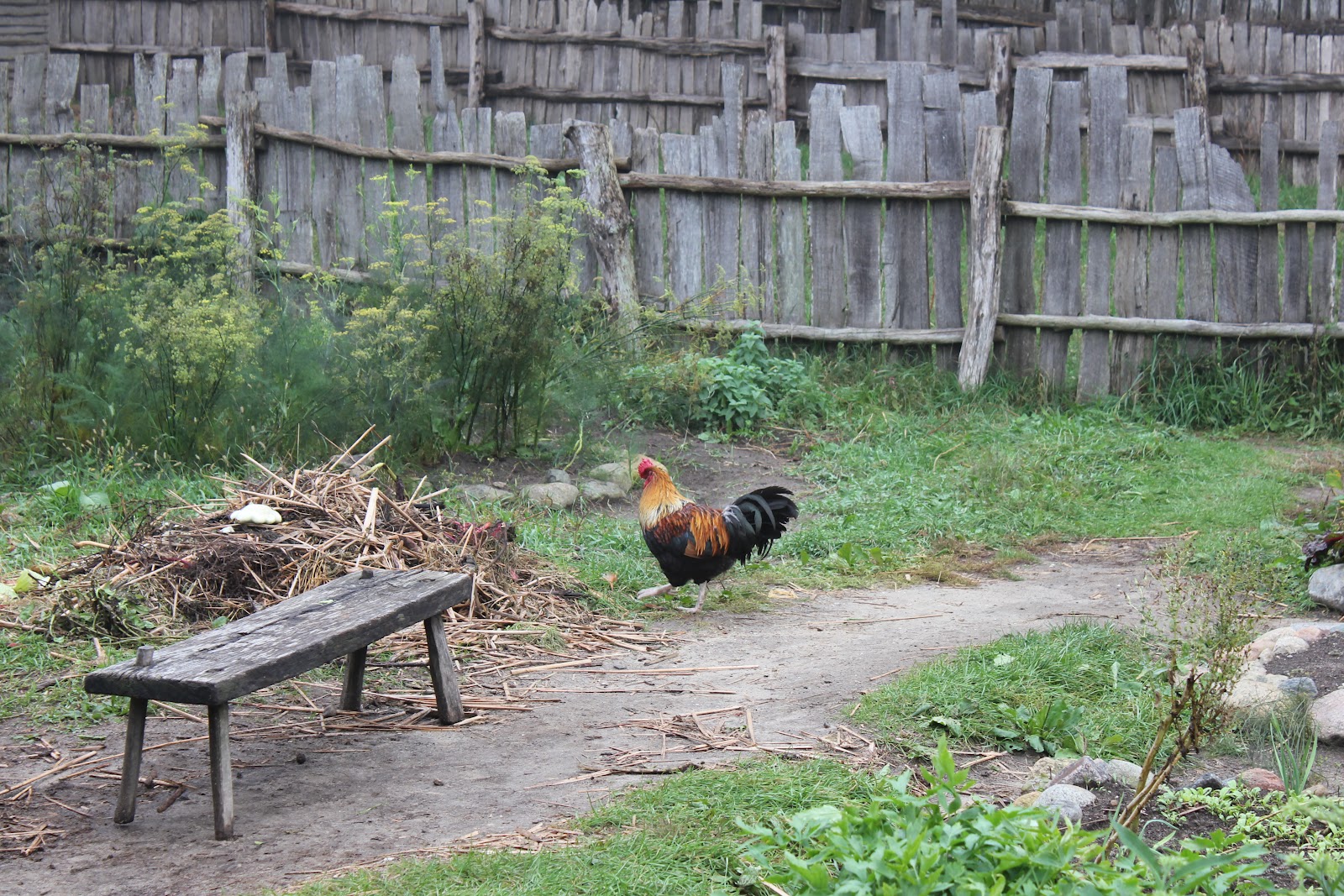
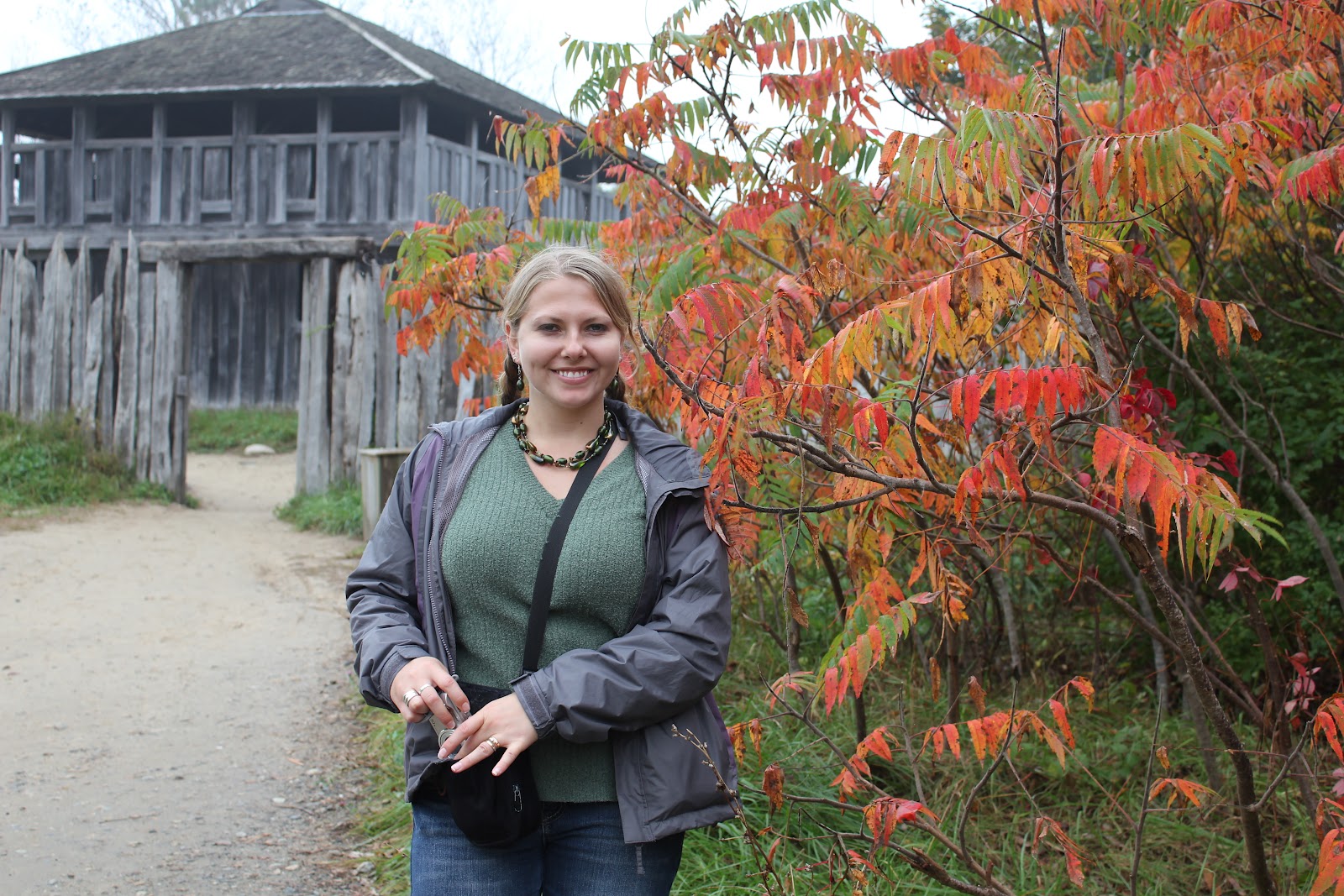
Afterward, we headed to Plimoth Plantation, a living museum. In the 1627 English Village section of the museum, interpreters have been trained to speak, act, and dress appropriately for the period. These historical interpreters interacted with their “strange visitors” (us) in the first person, answering questions, discussing their lives and viewpoints and participating in tasks such as cooking, planting, blacksmithing, and animal husbandry. If we asked them any question about something that happened or was discovered after 1627, they responded with confusion and bewilderment.
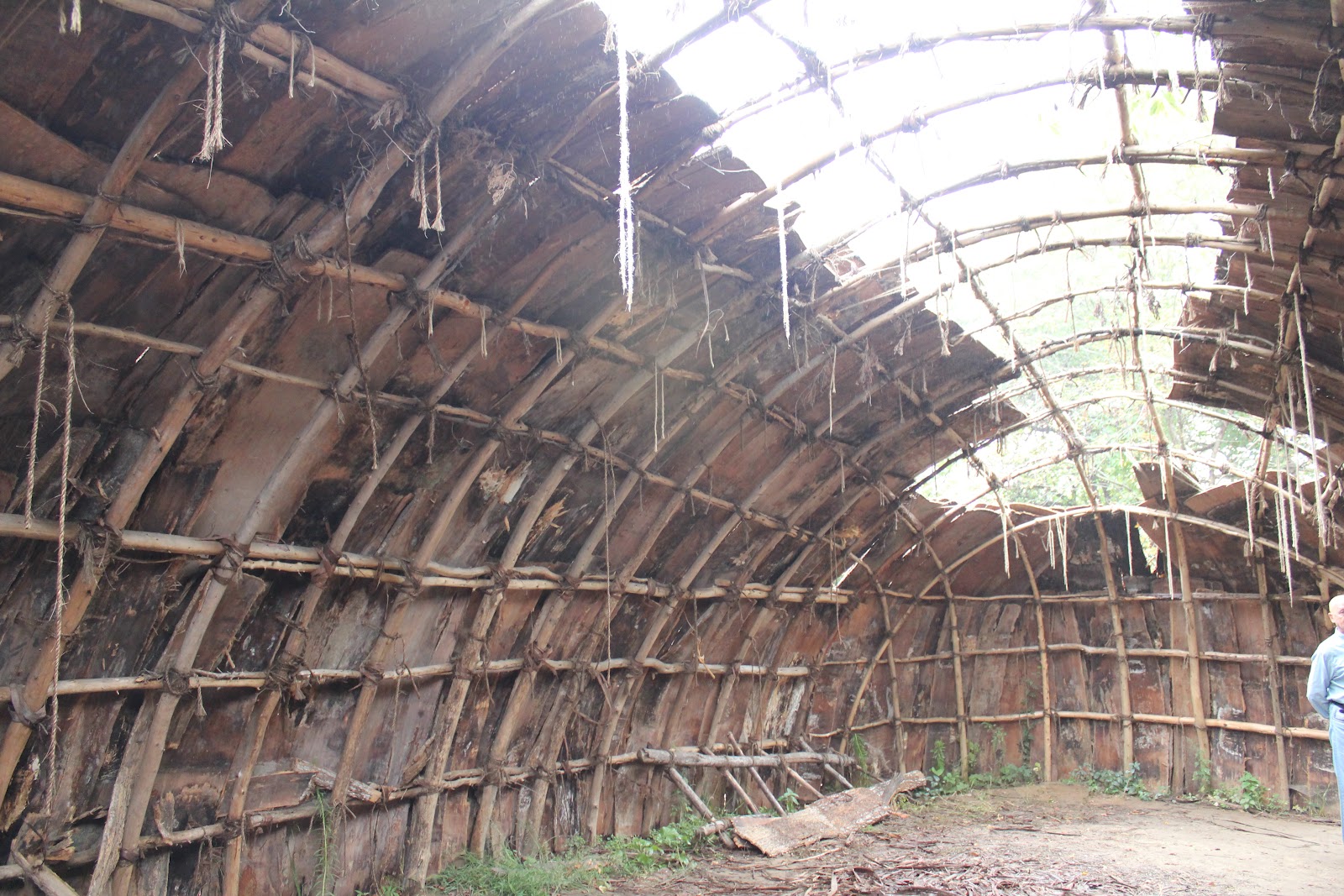
It also includes a re-creation of a Wampanoag site, where modern native people from a variety of nations (not in period character, but in traditional dress) explain and demonstrate how the Wampanoag’s ancestors lived and interacted with the settlers.
We had the best dinner of the trip at Isaac’s on the waterfront. I ordered a magnificent chicken fettuccini, Mom had filet and a baked sweet potato, and Michael had the lobster fantasy with scallops, mussels, clams, and shrimp.
In the deepening gloom of night during a slight patter of rain, we drove to the National Monument to the Forefathers, which was dedicated in 1889. Standing at 81 feet, it is the tallest free-standing solid granite monument in the United States.
Then we headed back to the waterfront for a ghost tour. We were the only guests who turned up, so we had the guide to ourselves. Our guide, dressed in a tri-corner hat and cloak, walked us around the old city at night, telling us the darker history behind some buildings and sites. When we entered the cemetery, he handed me a K-II meter which went off twice as we wandered the headstones and listened to stories about the dead. It was one of the best ghost tours I have ever been on.
Feet hurting and exhausted, we made the drive back to the hotel and crashed. We all loved Plymouth.