Friday, March 25, 2011

Christmas in Germany: Berlin: Days 1 and 2

On Christmas Eve, we rode the high-speed rail from Heidelberg to Berlin. It was snowing HARD, so our four-hour trip turned into six and a half hours on the train. Fortunately, we had first-class tickets and kept a booth to ourselves. We even ordered food for lunch: a strawberry salad for me and a ham sandwich for Michael. The train ride was stressful, because they kept making announcements in German, but not English, and we didn’t understand what was taking so long or why we kept skipping stops.


We arrived at the Berlin AM Main station after dark and tiredly climbed off the train. No more trains were running, so we took a cab to our hotel, a Holiday Inn. There we encountered more bad news: the electricity was out due to the massive snowstorm and they couldn’t check us into the hotel. So we sat in the hotel restaurant and drank, and we made friends with a New York high school principal who told horror stories of being stranded at the Frankfurt airport for days due to the snow. We split a burger and fries. The power eventually came back on and we checked in.

That night, like every night we experienced at the Holiday Inn, several people ran yelling through the halls around 3:00 AM. We were not happy.

The next morning, Christmas Day, dawned crisp and frigid. It was negative ten degrees Celsius, with a strong wind whipping our coats. After breakfast at the hotel (which we later discovered was not covered on our reservation—ouch!), we took a cab to Museum Island in Berlin. This unique island, situated between the Rivers Spree and Kupfergraben, holds five separate museums (Altes Museum, Neues Museum, Alte Nationalgalerie, Bode-Museum and Pergamonmuseum), each of incomparable cultural and historical importance. It is a UNESCO World Cultural Heritage Site. All the buildings suffered severe damage during WWII. It was so cold outside, huge chunks of ice floated in the rivers.

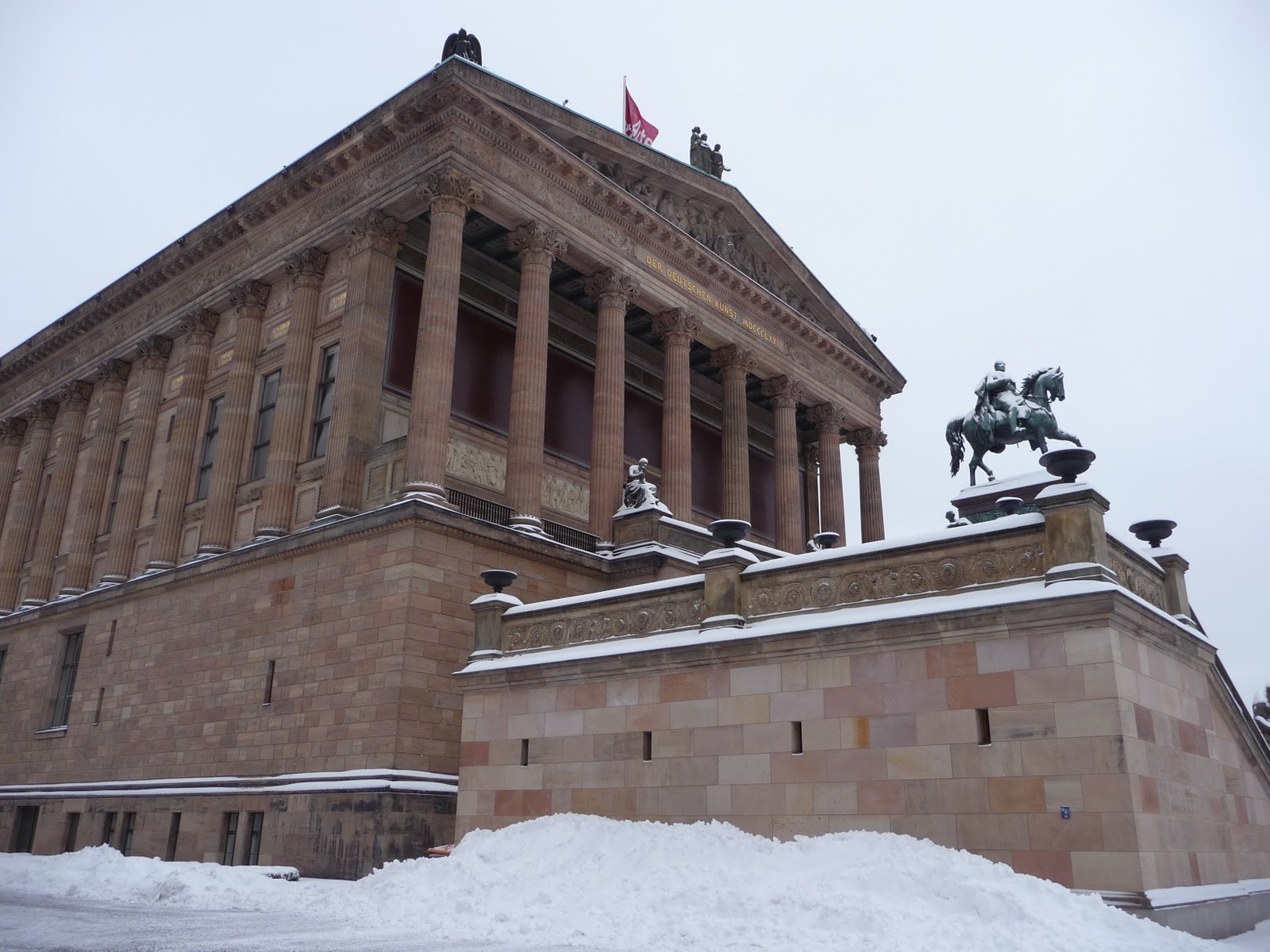


Our first stop was Neues Museum, one of the main reasons we had come to Berlin. The reason? Nefertiti’s bust is housed there. When you think of Egypt, first you think pyramids, and then you think of Tut’s death mask, but after that, most likely you think of Nefertiti’s bust. Of course, we weren’t allowed to take photographs of her, but standing in her presence was jaw-dropping. Nothing can prepare you for the beauty of that artifact.

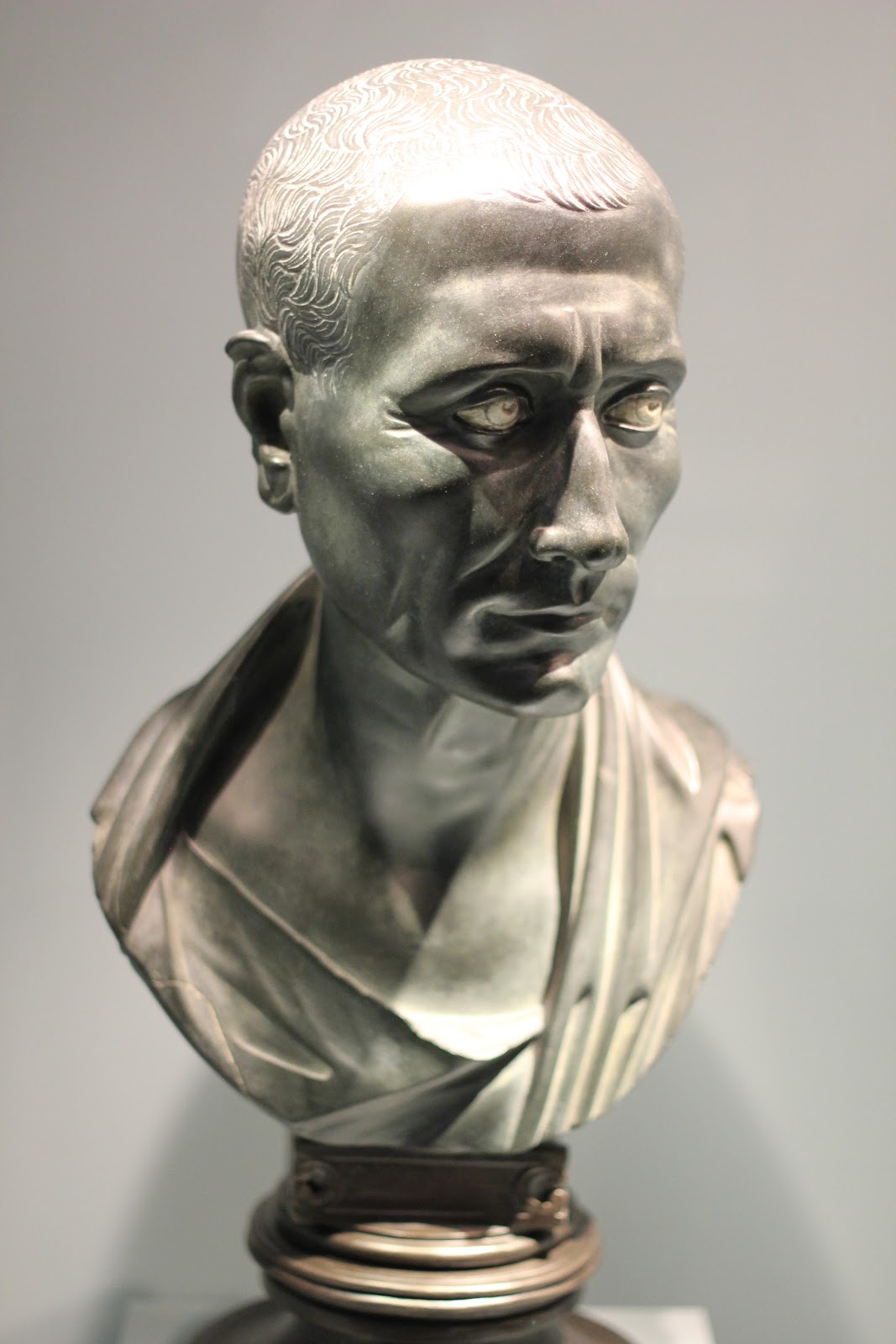
We had been told on the phone that no cameras were allowed in the museum, but it turns out that was inaccurate. So Michael took a cab back to the hotel and grabbed the camera while I waited on the first floor of the Egyptian museum. Then, we snapped a zillion pictures of the artifacts in the Neues. The Neues holds the Egyptian Museum and Papyrus Collection, the Museum of Prehistory and Early History and various artifacts from the Collection of Classical Antiquities. Archaeological treasures like Nefertiti, the Armana collection, and the green head, combine with the Museum of Prehistory and Early History, such as the skull of the Neanderthal from Le Moustier or Heinrich Schliemann’s collection of Trojan Antiquities. Below are a few favorites.


The famous "green head"

WWII shrapnel and bullet holes in the museum walls


After the Neues, we hit the Altes Museum. Here we saw artifacts from the Etruscans and Romans, as well as Greek art. We also had a bite of quiche at the café. It was dry.


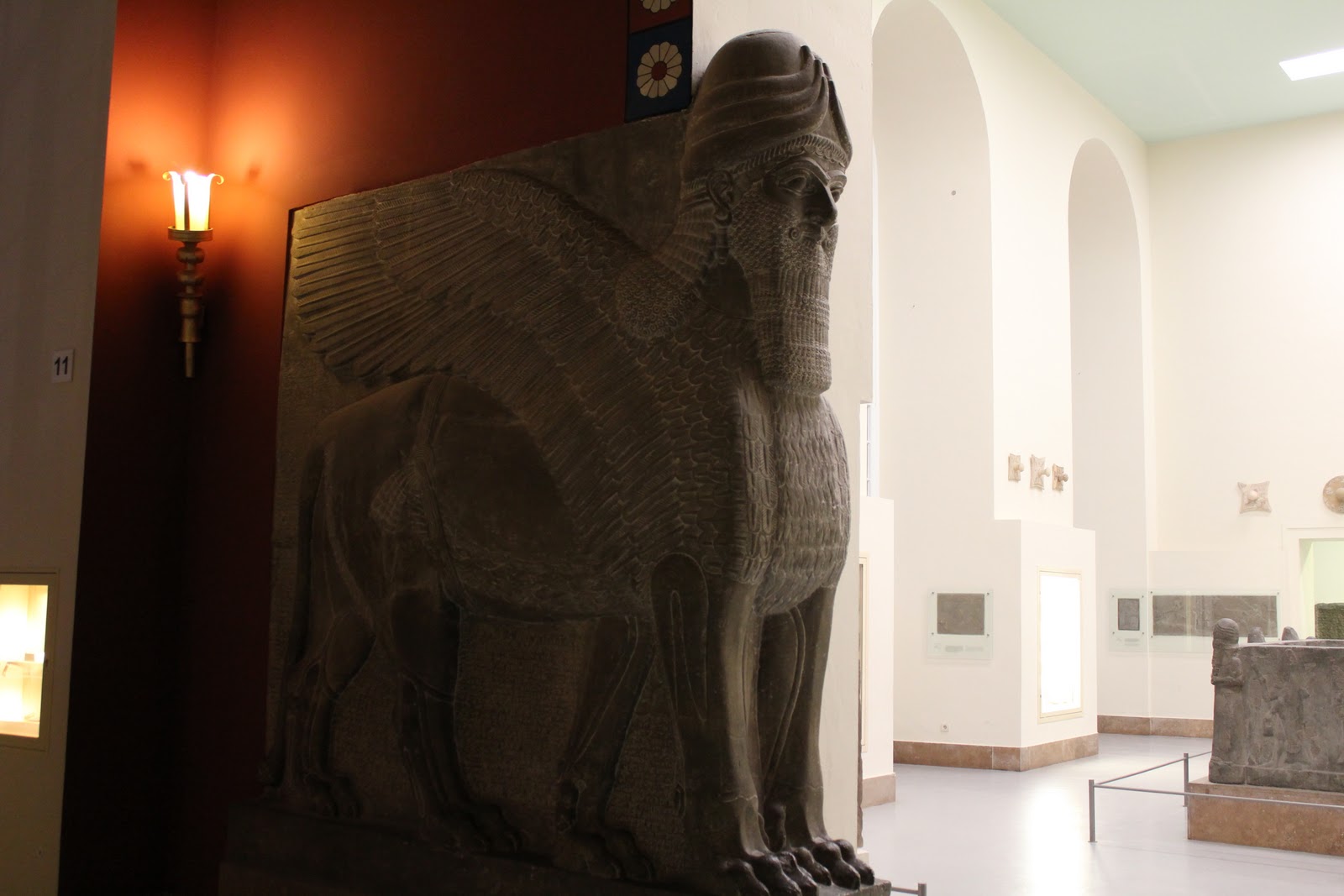
We were then thrilled to discover that the Pergamonmuseum, a museum we’d been dying to see, wasn’t closed like we had been told. So we headed there. This amazing museum involves the monumental reconstruction of archaeological buildings from places like Turkey. Some of the reconstructions include the Pergamon Altar, the Market Gate of Miletus, the Ishtar Gate, the Processional Way of Babylon, and the Mshatta Façade. It was breathtaking.

Yeah, they reconstructed this brick by brick


Our feet were getting tired by this point, but we braved one more museum. The Bode-Museum was filled with medieval and Renaissance religious art. Although we didn’t enjoy it as much as the artifacts or the reconstructed buildings we’d already seen, I think it was just because we’d been spoiled. If the Bode’s exhibit had been in Tennessee, I would rave about it.


After four museums and being on our feet all day, we went back to the hotel and had steaks and tomato soup at the hotel restaurant. Nothing else was open on the holiday. In all, it was a wonderful Christmas Day.

Wednesday, March 16, 2011

Christmas in Germany: Heidelberg

It was a little over three and a half hours on the train from Munich to Heidelberg, with one train change. The trains were all delayed somewhat due to the dense fog that restricted visibility to a few feet. Upon arrival, we promptly got lost. Luckily, some friendly German guys saw us puzzling over our maps and helped us orient ourselves. We checked into the Heidelberg Marriott and argued with the concierge over whether it would be ideal to take the city roads to the Old City or the park walkway across the river. He was for the city roads because it was so foggy, we couldn’t see anything across the river if we took the long way around. We took the park walkway across the river, and we were glad we did, despite the fact that both of us had serious pain in our shins from the hike to Neuschwanstein the day before.


We crossed the Old Bridge, erected in 1788, and entered through an original town gate, from medieval times. The fog held; it was only after we had crossed the bridge that we saw the faint outline of Heidelberg Castle through the mist. The old town (German: Altstadt), situated on the Neckar River, is long and narrow. It is dominated by the ruins of the Heidelberg Castle. It was all the more beautiful for being just a hint, a suggestion, a whisper through the fog.

We were hungry after our long train ride, and we immediately ate at the Hotel Zum Ritter. This was a lot fancier than we expected, and we were the only people there. We felt out of place in our jeans and hiking boots. I had a cheese tortellini in paprika cream sauce drizzled with a balsamic reduction and a riesling. Michael ordered the deer steak, but he received the wiener schnitzel. He didn’t realize he got the wrong menu item until he’d already finished half of his meal. Everything was terrific.


After lunch, we took the historic funicular railways up to the castle. It was already almost 4:00 in the evening. These rails went about 45 degrees up the mountain and were a little disconcerting.

We then paid for the audio guides and started walking around the grounds of the breathtaking ruins of Castle Heidelberg. This ended up being my favorite castle in Germany. Perched high above the narrow lanes and picturesque roofs of the old town, the magnificent red sandstone building breathed history. Again, the fog only added to its beauty. Built in the 1100s, the castle was partially destroyed during a few different wars and sieges, mainly in the Thirty Years War in the 1600s.


A cannonball embedded in the wall

The witch's bite - legend has it the king offered to give the castle to anyone who could bite through this ring, and a witch tried really, really hard, but only managed to dent it.


The largest wine cask in the world. It was filled 4 times.

The Powder Turret, split by an explosion, was described by Mark Twain in his 1880 book A Tramp Abroad:

“A ruin must be rightly situated, to be effective. This one could not have been better placed. It stands upon a commanding elevation, it is buried in green woods, there is no level ground about it, but, on the contrary, there are wooded terraces upon terraces, and one looks down through shining leaves into profound chasms and abysses where twilight reigns and the sun cannot intrude. Nature knows how to garnish a ruin to get the best effect. One of these old towers is split down the middle, and one half has tumbled aside. It tumbled in such a way as to establish itself in a picturesque attitude. Then all it lacked was a fitting drapery, and Nature has furnished that; she has robed the rugged mass in flowers and verdure, and made it a charm to the eye. The standing half exposes its arched and cavernous rooms to you, like open, toothless mouths; there, too, the vines and flowers have done their work of grace. The rear portion of the tower has not been neglected, either, but is clothed with a clinging garment of polished ivy which hides the wounds and stains of time. Even the top is not left bare, but is crowned with a flourishing group of trees & shrubs. Misfortune has done for this old tower what it has done for the human character sometimes−improved it.”

After we had seen the castle, we wandered the old town as long as our legs could carry us. We stopped for a glühwein by an ice skating rink and wished fervently that we had a place to stow our camera bag and our legs didn’t hurt so we could skate with the other revelers. But as darkness took the city, we meandered back to the hotel, stopping at every store that was open and enjoying the chilly night. We skipped dinner and returned to the hotel as soon as we had explored the rest of the old town.