Sunday, June 15, 2014
Recognizing beauty... EVERYWHERE
I’ve always been someone who finds beauty in unexpected places, but that part of me has been amplified since I moved to Costa Rica. I’m not trying; it just happens. I approach every new day with an unfailing sense of wonderment. I’m far from being jaded to the point that small things that others don’t notice fill me with childlike delight.
I wax poetic when the thunderstorms roll in and a hard rain settles in for the afternoon and night—despite the fact that I have to walk home through running water and sideways rain and I’m completely bedraggled by the time I get there.
I am enchanted by things others find ugly. Rusted tin roofs and graffiti and volunteer tomato plants growing randomly in the sewers. Leaf cutters walking across the sidewalk and hunched little old ladies who wish me buenos días on my morning run.
I appreciate all types of people I encounter even if they aren’t my favorite personality type. I love meeting people and I also love being alone. If I go downtown and walk among the jam-packed Avenida Central on a weekend, I can’t stop grinning over the raucous, teeming crowd.
Cloudy skies make me cry out with joy over how they resemble watercolor paintings. I exclaim over blue skies. Pink sunsets and slow gray dusks make me point upward and talk about the beauty there.
I recently spent a month with a roommate from a different culture. Several weeks into living with him, he mentioned he had never seen a Cheshire moon before and was surprised at how often that happened in Costa Rica. As far as I am aware, Cheshire moons are common everywhere, not just here. I was confused until I realized that he had simply never made a habit of looking up. But he lived with me, who said, “Oh, look at that amazing moon,” so many times, it opened his eyes to all the different moons there are.
Instead of engaging people who bring me down, I simply walk away. I don’t have time for their dramas and I refuse to be subjected to their negativity.
And THAT, my friends, is what has really changed in me. I spent over ten years loving someone who was negative at least 5 minutes out of every day –and sometimes 24 hours out of the day. I engaged it. I tried to help. When that didn’t work, I was sucked into the negativity. I was hurt. I was angry. I cried a lot. I never got real apologies and I had to be fine with weathering it until it passed.
How liberating it is to remove myself from other people’s crap. And of course, Costa Rica is very pura vida and most people don’t walk around upset and grumpy and nasty. I had a person tell me the other day it was beautiful how I laughed, beautiful how I even laughed at my own expense, beautiful how I found joy and humor in little things. I had another person say she craved my positive energy. I’ve also been teased for finding simple things extraordinary, but I am proud of this part of me.
My secret? Love yourself first. Take care of yourself, honor yourself. Put yourself in an environment that makes you happy. Back away from melodrama. And look around at how much beauty there is.
Tuesday, May 27, 2014
Cultural fetishism - the sexualization of white skin
I often laugh and joke about how “well appreciated” I am in Latin America. But really, cultural fetishism is no laughing matter.
The last few weeks, I have been running every morning. I get catcalls, whistles, and honks. You can follow my progress through my barrio by listening for cries of “guapa” and “la princesa.” It’s so extreme, once I caught a man behind the wheel of a moving pickup truck taking a photo of me.
I'm a young white woman who is often alone. I have naturally blond hair that is only getting blonder from the Costa Rican sun and the slightly chlorinated tap water coming out of my shower head.
Apparently, I'm just the right type.
One of the things I love about Costa Rica is the women. Ticas are proud of being women. They dress how they want and carry their heads high. This is not a culture where women are suppressed and hidden and expected to fade into the background. These ladies are tough and strong, or at least they outwardly project an illusion of strength. I think part of the reason is because they have to be. They’ve grown up in a machismo culture and instead of bowing to it, they stood up even taller. They are bright and smart and interesting and funny and kind. Not to mention how many are drop-dead gorgeous.
So why do men here desire extranjeras, foreigners, instead of these awesome women who are right in front of them?
Cultural fetishism is harmful not only to the people being fetishized, but also to the group being ignored.
Costa Rica is not as jammed and littered with billboards and advertisements as the United States, but where you do see ads, if a woman is pictured, she is almost always light-skinned or white, with light colored hair. These ads set up a cultural standard for beauty that is unachievable, because the majority of women here are born with lush, beautiful black hair and lovely complexion in various shades of light tan to brown. These advertisements encourage the fetishism of light-skinned women and send a message to the others that they are not desirable.
I want to rip down those billboards every time I see them.
This cultural trend (perpetuated by beauty and personal product corporate conglomerates which are usually foreign-owned themselves) is extremely unhealthy to the women and girls who live here. I went to a cosmetics store the other day and bought mascara and soap. My purchase qualified me for a free gift and I hardly paid attention to what it was until I got home. Then I realized I had been given skin whitener. I was horrified. Why does skin whitener even exist? Because we make women with dark skin feel they are not beautiful.
Fetishism also hurts the person being fetishized—in this case, people who look like me. I cannot go a single day without at least one person leering and catcalling. I am openly and brazenly objectified. I changed my walking route to work because of a creepy security guard who absolutely will not shut up when I walk by him, the entire time I am within sight. When I was visiting Nicaragua, men literally barked like dogs at me as I walked down the street. I am called out, hypersexualized, and constantly have to deal with unwanted attention.
I usually laugh it off and try to take it as a compliment. But it would be nice to be genuinely complimented rather than shouted or honked at. It would be even nicer to have someone interested in my mind rather than my physical appearance.
I wish marketers would present women of all shapes and sizes and colors as beautiful. And I wish men wouldn’t be so stupid as to swallow the current messaging out there.
Come on, guys. You’re getting egg on the faces of good Latin American men.
The last few weeks, I have been running every morning. I get catcalls, whistles, and honks. You can follow my progress through my barrio by listening for cries of “guapa” and “la princesa.” It’s so extreme, once I caught a man behind the wheel of a moving pickup truck taking a photo of me.
I'm a young white woman who is often alone. I have naturally blond hair that is only getting blonder from the Costa Rican sun and the slightly chlorinated tap water coming out of my shower head.
Apparently, I'm just the right type.
One of the things I love about Costa Rica is the women. Ticas are proud of being women. They dress how they want and carry their heads high. This is not a culture where women are suppressed and hidden and expected to fade into the background. These ladies are tough and strong, or at least they outwardly project an illusion of strength. I think part of the reason is because they have to be. They’ve grown up in a machismo culture and instead of bowing to it, they stood up even taller. They are bright and smart and interesting and funny and kind. Not to mention how many are drop-dead gorgeous.
So why do men here desire extranjeras, foreigners, instead of these awesome women who are right in front of them?
Cultural fetishism is harmful not only to the people being fetishized, but also to the group being ignored.
Costa Rica is not as jammed and littered with billboards and advertisements as the United States, but where you do see ads, if a woman is pictured, she is almost always light-skinned or white, with light colored hair. These ads set up a cultural standard for beauty that is unachievable, because the majority of women here are born with lush, beautiful black hair and lovely complexion in various shades of light tan to brown. These advertisements encourage the fetishism of light-skinned women and send a message to the others that they are not desirable.
I want to rip down those billboards every time I see them.
This cultural trend (perpetuated by beauty and personal product corporate conglomerates which are usually foreign-owned themselves) is extremely unhealthy to the women and girls who live here. I went to a cosmetics store the other day and bought mascara and soap. My purchase qualified me for a free gift and I hardly paid attention to what it was until I got home. Then I realized I had been given skin whitener. I was horrified. Why does skin whitener even exist? Because we make women with dark skin feel they are not beautiful.
Fetishism also hurts the person being fetishized—in this case, people who look like me. I cannot go a single day without at least one person leering and catcalling. I am openly and brazenly objectified. I changed my walking route to work because of a creepy security guard who absolutely will not shut up when I walk by him, the entire time I am within sight. When I was visiting Nicaragua, men literally barked like dogs at me as I walked down the street. I am called out, hypersexualized, and constantly have to deal with unwanted attention.
I usually laugh it off and try to take it as a compliment. But it would be nice to be genuinely complimented rather than shouted or honked at. It would be even nicer to have someone interested in my mind rather than my physical appearance.
I wish marketers would present women of all shapes and sizes and colors as beautiful. And I wish men wouldn’t be so stupid as to swallow the current messaging out there.
Come on, guys. You’re getting egg on the faces of good Latin American men.
Friday, April 25, 2014
Life in the big (Latin American) city
I grew up in two places, one in Ohio and one in Tennessee.
My childhood home in Ohio was a farmhouse built in the late 1800s, with flawed lead windows and woodwork and floors constructed with wooden pegs instead of metal nails. We had a wood-burning stove and five acres of farmland with hundred-year-old weeping willows and a large garden.
My home in Tennessee was on a 60-acre farm with expansive pastures, a huge garden, a flowing creek to catch crayfish in, and brambly juniper woods with rock formations for pretend castles. The house had a quarter mile long driveway.
In both homes, I had 4-5 horses, sheep, birds, 4-8 dogs, and assorted barn cats… a veritable zoo. When I was bored, I would climb on my white horse bareback and read a book lying backward on her back while she grazed.
When I bought my own house after college, I moved to the suburbs. But still, I had an open view of the sky, an acre yard with a small vegetable garden, lots of trees, and very little traffic. And four amazing little dogs.
For reference, here are some population numbers:
For me, that’s a big city.
Having lived here for a while, there are some clichés that have started getting under my skin.
San José es muy feo.
San José is not the most beautiful place on earth, I will grant you. There are several large sectors of sprawling ghetto. Houses are thrown together with corrugated tin and cheap materials. Litter chokes the gutters. Buses spew black smoke into the air. Gray water is pumped into the rivers and sewers.
But it is also surrounded by high green Costa Rican mountains in every direction. At night, these mountains twinkle like warm yellow stars close enough to cup in your hand. Stately palm trees and bird of paradise flowers sprinkle the sidewalks with reminders that you are 10 degrees north of the equator, but the breeze never stops and the nights are cool enough to want a sweater because of the elevation.
Several Spanish-influenced colonial buildings surprise you around each corner. San José has many beautiful theaters including the lovely Teatro Nacional. Several churches catch your breath and a few hotels are stunning.
San José, to me, is all the more beautiful because it is BURSTING with life despite the rampant poverty. Walk downtown to Avenida Central on a Saturday morning and you can barely move for all the people. Some shout about the wares they are vending, some are playing music or dancing in the street, some are shopping, and some are simply sitting under the shade of a palm tree munching on helado or, my personal favorite street food, mangos verdes con limon y sal.
San José es peligroso.
San José is no more dangerous than any big city. In fact, San José is one of the safest and least violent cities in the region. Costa Rica is the third most peaceful country in Latin America, says the sixth edition of the Global Peace Index (GPI). In the global ranking, Costa Rica obtained the 36th position among 158 countries.
You can look it up yourself, but violent crime in San José either mirrors rates in other big cities or is lower. Petty theft is common, as it is in ANY place where large numbers of people live. Does that make San José inherently dangerous? I say no. It makes it a CITY.
You should only spend one night in San José and then get out of there.
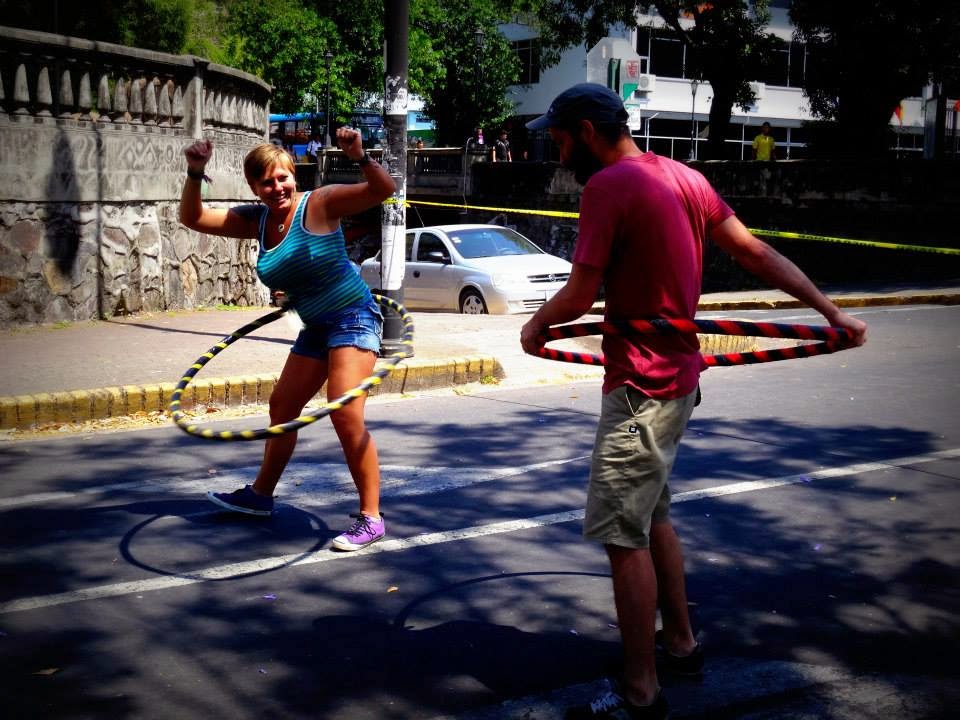
(This one I hear from gringo tourists.) Because it is a large, diverse city, San José has numerous cultural, musical, and artistic presentations and activities, which include traditional and modern Costa Rican and San José culture. On a given day, you can find live theater, museums, visual art, parks filled with free mind puzzles, hula hooping, roller skating, live music, drama, dance, concerts, demonstrations, parties, film festivals, and intellectual diversions.
I keep saying over and over, San José doesn’t get nearly enough credit for how great it is. It is COOL to live here. There is always something stimulating going on. There is always something to do. Something to help you grow as a person. Something to expand your horizons. Why would anyone ever want to breeze through a place like that?
Maybe it’s because I have never lived in a place you can legitimately call a city before, but I am in love with where I live. Will I stay here forever? No. Do I long for the woods and a quieter pace of life? Occasionally.
But it really gets under my skin when people take a look at the loud, sometimes smelly, bustling surface of the city and conclude it’s a crap place. Because in actuality, it’s a great place to call home.
My childhood home in Ohio was a farmhouse built in the late 1800s, with flawed lead windows and woodwork and floors constructed with wooden pegs instead of metal nails. We had a wood-burning stove and five acres of farmland with hundred-year-old weeping willows and a large garden.
My home in Tennessee was on a 60-acre farm with expansive pastures, a huge garden, a flowing creek to catch crayfish in, and brambly juniper woods with rock formations for pretend castles. The house had a quarter mile long driveway.
In both homes, I had 4-5 horses, sheep, birds, 4-8 dogs, and assorted barn cats… a veritable zoo. When I was bored, I would climb on my white horse bareback and read a book lying backward on her back while she grazed.
When I bought my own house after college, I moved to the suburbs. But still, I had an open view of the sky, an acre yard with a small vegetable garden, lots of trees, and very little traffic. And four amazing little dogs.
For reference, here are some population numbers:
- Population 15,000 Pataskala, Ohio (childhood hometown)
- Population 28,000 Lebanon, Tennessee (actually I lived in the sticks well outside town)
- Population 114,000 Murfreesboro, Tennessee (where I bought my house, a university town)
- Population 600,000 Nashville, Tennessee (where I never actually lived, just went downtown some days)
For me, that’s a big city.
Having lived here for a while, there are some clichés that have started getting under my skin.
San José es muy feo.
San José is not the most beautiful place on earth, I will grant you. There are several large sectors of sprawling ghetto. Houses are thrown together with corrugated tin and cheap materials. Litter chokes the gutters. Buses spew black smoke into the air. Gray water is pumped into the rivers and sewers.
But it is also surrounded by high green Costa Rican mountains in every direction. At night, these mountains twinkle like warm yellow stars close enough to cup in your hand. Stately palm trees and bird of paradise flowers sprinkle the sidewalks with reminders that you are 10 degrees north of the equator, but the breeze never stops and the nights are cool enough to want a sweater because of the elevation.
Several Spanish-influenced colonial buildings surprise you around each corner. San José has many beautiful theaters including the lovely Teatro Nacional. Several churches catch your breath and a few hotels are stunning.
San José, to me, is all the more beautiful because it is BURSTING with life despite the rampant poverty. Walk downtown to Avenida Central on a Saturday morning and you can barely move for all the people. Some shout about the wares they are vending, some are playing music or dancing in the street, some are shopping, and some are simply sitting under the shade of a palm tree munching on helado or, my personal favorite street food, mangos verdes con limon y sal.
San José es peligroso.
San José is no more dangerous than any big city. In fact, San José is one of the safest and least violent cities in the region. Costa Rica is the third most peaceful country in Latin America, says the sixth edition of the Global Peace Index (GPI). In the global ranking, Costa Rica obtained the 36th position among 158 countries.
You can look it up yourself, but violent crime in San José either mirrors rates in other big cities or is lower. Petty theft is common, as it is in ANY place where large numbers of people live. Does that make San José inherently dangerous? I say no. It makes it a CITY.
You should only spend one night in San José and then get out of there.
(This one I hear from gringo tourists.) Because it is a large, diverse city, San José has numerous cultural, musical, and artistic presentations and activities, which include traditional and modern Costa Rican and San José culture. On a given day, you can find live theater, museums, visual art, parks filled with free mind puzzles, hula hooping, roller skating, live music, drama, dance, concerts, demonstrations, parties, film festivals, and intellectual diversions.
I keep saying over and over, San José doesn’t get nearly enough credit for how great it is. It is COOL to live here. There is always something stimulating going on. There is always something to do. Something to help you grow as a person. Something to expand your horizons. Why would anyone ever want to breeze through a place like that?
Maybe it’s because I have never lived in a place you can legitimately call a city before, but I am in love with where I live. Will I stay here forever? No. Do I long for the woods and a quieter pace of life? Occasionally.
But it really gets under my skin when people take a look at the loud, sometimes smelly, bustling surface of the city and conclude it’s a crap place. Because in actuality, it’s a great place to call home.
Wednesday, March 26, 2014
Inertia versus kinesis: making a reason
There is a common phrase that goes like this: Everything happens for a reason.
I am not a fan of that adage. It implies that we should sit passively and wait for good things to happen to us. It implies that we should relinquish our desire to work to change bad things because they’re happening for some grand reason we don’t understand. I don’t think it is wise to take such an idle approach to the only life you have. I’m more of a take-life-and-beat-it-into-a-pulp-with-a-stick-until-it-rises-to-your-expectations kind of lass.
I believe that you can make the best of everything that happens and make it fuel for a good change in your life. Some would say I am splitting hairs and really just expressing the sentiment of the proverb above. But I think it’s an important distinction.
Sometimes, you have to fight for your life. You have to work and sacrifice and bleed to get to the peak or you will be Sisyphus, forever stuck at the bottom of your hill. You can—and should—take misfortune and hurt, pull yourself up to stand high above them, and improve your life because of them. But it takes work. It doesn’t just happen.
Sometimes people say to me, “I wish I could do what you’re doing.” Most middle-class Americans I know CAN do what I’m doing but are unwilling to make the hard choices I did. I grabbed the deepest pain I have ever felt. Once it was made clear to me I could do nothing to salvage my old life, I transformed that pain into the biggest opportunity I have ever had. It took liquidating my entire life, bidding my friends and family farewell, hugging my precious dogs for what may be the last time, resigning my long-term job, facing utter solitude, and coming to live in relative austerity, but I did it. I am quite happy I did and would not change a thing about where I am right now. But that doesn’t make what I did any easier. It was the hardest thing I have ever done. Being a phoenix involves walking through fire before you can come out golden.
What I did is not for everyone; please don’t take all this pontificating to mean that I think it is the only way or the right way to go about life. Not everyone is as crazy as I am. Although it was right for me, every person is different, and those who choose a different life are not ignoble or somehow less-than.
However, whatever your path, don’t sit around and wait on life to come to you. Get up and start chasing your life until you have it in your grasp.
Tuesday, February 18, 2014
If you haven’t tried international volunteering yet, do
I came to Costa Rica to teach English. I took a month-long college-level course and am now internationally certified for Teaching English as a Foreign Language (TEFL). Before I even graduated I started sending out job applications, and I landed 6 interviews for teaching jobs. But life had different plans for me, and when I was offered the role of Director of Client Services and Admissions of an intercultural center that offers TEFL courses, Native Spanish programs, English lessons, and International Volunteering and Internship programs as well as Adventure packages, I was hooked and said yes.
My job is in Costa Rica but we also have locations in Guatemala and Perú. Therefore, promptly upon starting my job, I took off on a 20-day visit to La Antigua, Guatemala, and Cusco, Perú, to get to know our operations, staff, and volunteering projects in both countries.
I never thought I would be interested in volunteering at all, to be honest. Although I have traveled to 14 countries now, all of my travel has been about experiencing the culture and not lending a hand. It’s been for me.
But I have fallen in love with international volunteering.
In Guatemala, I worked on a coffee plantation, played with girls at a home for sexually abused girls who have been removed from their homes, lent a hand at a home for severely disabled children, worked at a medical campaign at a school to teach kids hand-washing and tooth-brushing and get them medical care, visited a shelter for over 300 dogs and a donkey, checked out a sea turtle conservation project, visited the conservation project at Lake Atitlán, talked in Spanish with the man who runs a construction project about his needs, and handed out snacks and taught English at an after-school program for 97 kids in a place with 3 staff members, none of them paid.
In Perú, I walked 30 minutes on a mud road to play with kids at an orphanage, dropped in on a free evening English class for adults run solely through volunteering, installed drywall in a school with my bare hands, cleaned animal cages at a zoo, talked in a mix of Spanish and Quechua with the leaders of a tiny village in the Sacred Valley, spooned with a monkey in the Amazon jungle (no really), toured two orphanages and discussed their needs with the directors in Spanish, visited 5 medical projects from large hospitals to clinics with dirt floors, and helped coordinate activities at a home for children with special needs.
Even though I would have never thought of myself as a “humanitarian,” I’m addicted to helping out. I have always been very aware of my privilege in this world, but I did not understand the power of actually doing something to physically help out. I thought I was experiencing other cultures when I planned my own independent travel and visited all those countries. Now I realize I was only barely scratching the surface.
Sitting in the Sacred Valley talking with a woman in my sketchy second language and a third language I have never spoken before about what volunteers are needed to do for the village (making dyes and weaving, cooking for workers, working in fields and pastures, making adobe bricks, building houses, and so much more) while she asked anxiously if everything was up to my standards was such a special experience. If I wasn’t involved in a volunteering program, I would have just driven on through and marveled at the idyllic setting. I would have never connected with the quiet and beautiful culture of the Andean rural people.
Holding the hand of the boy with special needs as he struggled to walk around the block at a home for disabled children was eye-opening for me in terms of the availability of therapy and care in poor regions. The fact that he hugged me in thanks afterward was rewarding. Had I not been involved in international volunteering, I might have only seen the pretty church in that neighborhood, and I may not have noticed all the glass and nails in the street that I worked so hard to help the little boy avoid.
Handing out 97 cups of special oatmeal and chewable vitamins to reduce the appearance of white spots on the cheeks of very poor children aged 5-17 due to malnutrition, I understood on a personal level—not an academic one—the incredibly basic needs that are not being met in much of the world. If I wasn’t working with the volunteering program, I would have never seen how happy kids can be even in difficult or even desperate situations.
Volunteering on the coffee plantation gave me the chance to have a long conversation, in a language I am still learning, about the life of a kind and gentle woman who has worked on coffee farms since she was a babe. And painstakingly sorting each individual bean by hand into “buenos” and “malos” helped me appreciate the amount of work that goes into what so many take for granted.
Going to the Amazon and coming across all the landslides and a wreck that resulted in a man’s death helped me realize the fact that merely getting in a bus is taking your life into your own hands.
Watching the sexually abused girls hug the male volunteers in greeting brought home the HUGE impact of volunteering… the fact that the girls would even smile around men is a testament to the change wrought in their lives by volunteerism.
It’s powerful stuff. As a matter of fact, it’s a powerful world.
If you love to travel but have never rolled up your sleeves and volunteered in a new place where people need your help, you should try it. It’s a whole new way of experiencing the world and I can’t believe what I was missing out on all those years of traveling just to see the sights.
Get out there. Get dirty. Get humbled. Get inspired.
| Operating a bicycle-powered coffee depulper in Guatemala |
I never thought I would be interested in volunteering at all, to be honest. Although I have traveled to 14 countries now, all of my travel has been about experiencing the culture and not lending a hand. It’s been for me.
But I have fallen in love with international volunteering.
In Guatemala, I worked on a coffee plantation, played with girls at a home for sexually abused girls who have been removed from their homes, lent a hand at a home for severely disabled children, worked at a medical campaign at a school to teach kids hand-washing and tooth-brushing and get them medical care, visited a shelter for over 300 dogs and a donkey, checked out a sea turtle conservation project, visited the conservation project at Lake Atitlán, talked in Spanish with the man who runs a construction project about his needs, and handed out snacks and taught English at an after-school program for 97 kids in a place with 3 staff members, none of them paid.
![]() |
| Playing hopscotch with abused girls |
![]() |
| Learning hand-washing in a country without potable water |
![]() |
| Feeding a starving dog an apple because that's all I had |
![]() |
| Filling eco-blocks with plastic bits for construction filler |
![]() |
| Protecting turtle nests |
![]() |
| Cleaning up the lake |
![]() |
| Giving what we have |
![]() |
| Helping kids get to school without a bridge |
![]() |
| Making friends with cheerful kids |
In Perú, I walked 30 minutes on a mud road to play with kids at an orphanage, dropped in on a free evening English class for adults run solely through volunteering, installed drywall in a school with my bare hands, cleaned animal cages at a zoo, talked in a mix of Spanish and Quechua with the leaders of a tiny village in the Sacred Valley, spooned with a monkey in the Amazon jungle (no really), toured two orphanages and discussed their needs with the directors in Spanish, visited 5 medical projects from large hospitals to clinics with dirt floors, and helped coordinate activities at a home for children with special needs.
![]() |
| Getting splattered with mud on the way to an orphanage |
![]() |
| Meeting a volunteer host family |
![]() |
| Working in a tiny village |
![]() |
| Sleeping with a monkey |
![]() |
| Being creative with what we have |
![]() |
| Looking deeper than the pretty surroundings |
![]() |
| Working with animals |
Even though I would have never thought of myself as a “humanitarian,” I’m addicted to helping out. I have always been very aware of my privilege in this world, but I did not understand the power of actually doing something to physically help out. I thought I was experiencing other cultures when I planned my own independent travel and visited all those countries. Now I realize I was only barely scratching the surface.
Sitting in the Sacred Valley talking with a woman in my sketchy second language and a third language I have never spoken before about what volunteers are needed to do for the village (making dyes and weaving, cooking for workers, working in fields and pastures, making adobe bricks, building houses, and so much more) while she asked anxiously if everything was up to my standards was such a special experience. If I wasn’t involved in a volunteering program, I would have just driven on through and marveled at the idyllic setting. I would have never connected with the quiet and beautiful culture of the Andean rural people.
Handing out 97 cups of special oatmeal and chewable vitamins to reduce the appearance of white spots on the cheeks of very poor children aged 5-17 due to malnutrition, I understood on a personal level—not an academic one—the incredibly basic needs that are not being met in much of the world. If I wasn’t working with the volunteering program, I would have never seen how happy kids can be even in difficult or even desperate situations.
Volunteering on the coffee plantation gave me the chance to have a long conversation, in a language I am still learning, about the life of a kind and gentle woman who has worked on coffee farms since she was a babe. And painstakingly sorting each individual bean by hand into “buenos” and “malos” helped me appreciate the amount of work that goes into what so many take for granted.
Going to the Amazon and coming across all the landslides and a wreck that resulted in a man’s death helped me realize the fact that merely getting in a bus is taking your life into your own hands.
Watching the sexually abused girls hug the male volunteers in greeting brought home the HUGE impact of volunteering… the fact that the girls would even smile around men is a testament to the change wrought in their lives by volunteerism.
It’s powerful stuff. As a matter of fact, it’s a powerful world.
If you love to travel but have never rolled up your sleeves and volunteered in a new place where people need your help, you should try it. It’s a whole new way of experiencing the world and I can’t believe what I was missing out on all those years of traveling just to see the sights.
Get out there. Get dirty. Get humbled. Get inspired.
Subscribe to:
Posts (Atom)